
Powder coating is a modern industrial surface-finishing process used to protect and improve the appearance of metal components. It is widely used for storage racks, industrial furniture, fabricated steel components, machinery parts, electrical equipment, and many other industrial products.
Unlike conventional liquid painting, powder coating uses a dry powder material. The powder is electrostatically applied to a prepared metal surface and then cured in an oven. During curing, the powder melts and forms a strong, durable coating over the metal.
A good powder coating finish depends on more than just the powder. Surface preparation, pretreatment, powder application, curing, and quality inspection all play an important role.
What Is Powder Coating?
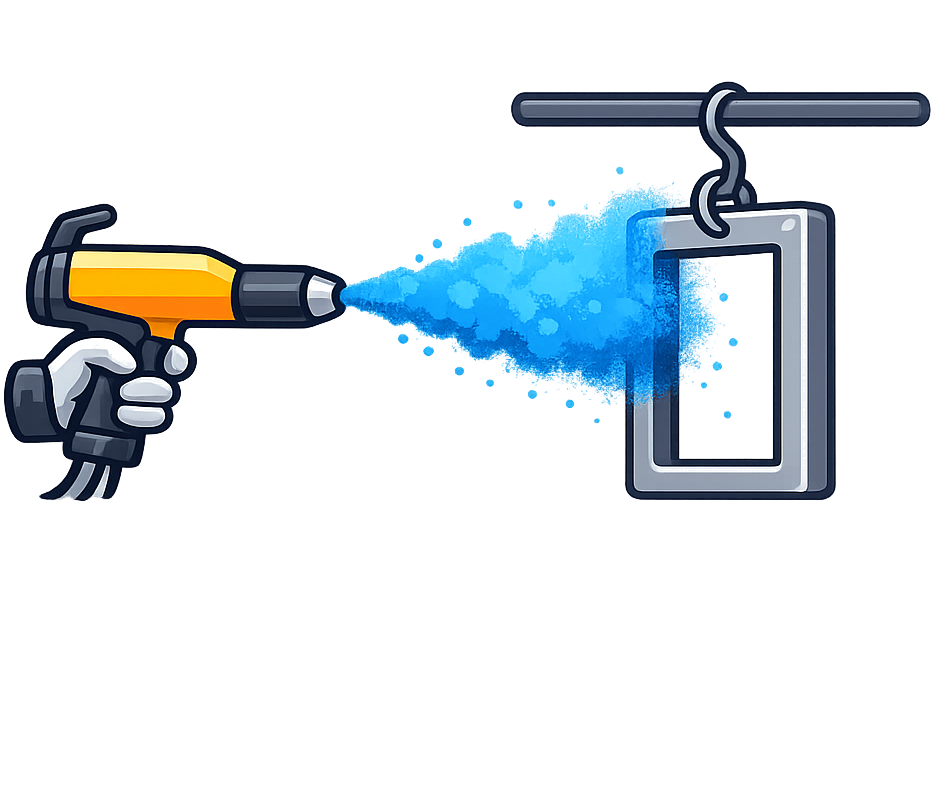
Powder coating is a dry coating process in which finely ground powder particles are electrically charged and sprayed onto a grounded metal component.
The charged powder is attracted to the metal surface and forms an even layer. The component is then heated in a curing oven. The powder melts, flows, and chemically bonds to form the final coating.
Why Is Powder Coating Used?
Metal components can be exposed to moisture, humidity, chemicals, dust, abrasion, and other environmental conditions. Without proper protection, the metal can corrode and deteriorate.
Powder coating provides a protective and attractive finish. Some key benefits include:
- Good corrosion protection
- Durable surface finish
- Strong paint adhesion
- Good resistance to wear & tear
- Consistent uniform appearance
- Wide range of colours & textures
- Suitable for diverse industrial uses
The actual performance depends on the powder system, substrate preparation, and process control.
How Does the Powder Coating Process Work?
1. Surface Preparation
The metal surface must be properly prepared before coating. Oil, grease, dirt, rust, dust, and other contaminants can affect coating adhesion and cause defects. Proper cleaning creates a suitable surface for the next stage.
2. Pretreatment
After cleaning, the component undergoes a chemical pretreatment process (such as a 7-tank zinc phosphating system). Pretreatment helps improve coating adhesion and provides additional protection against corrosion.
3. Powder Application
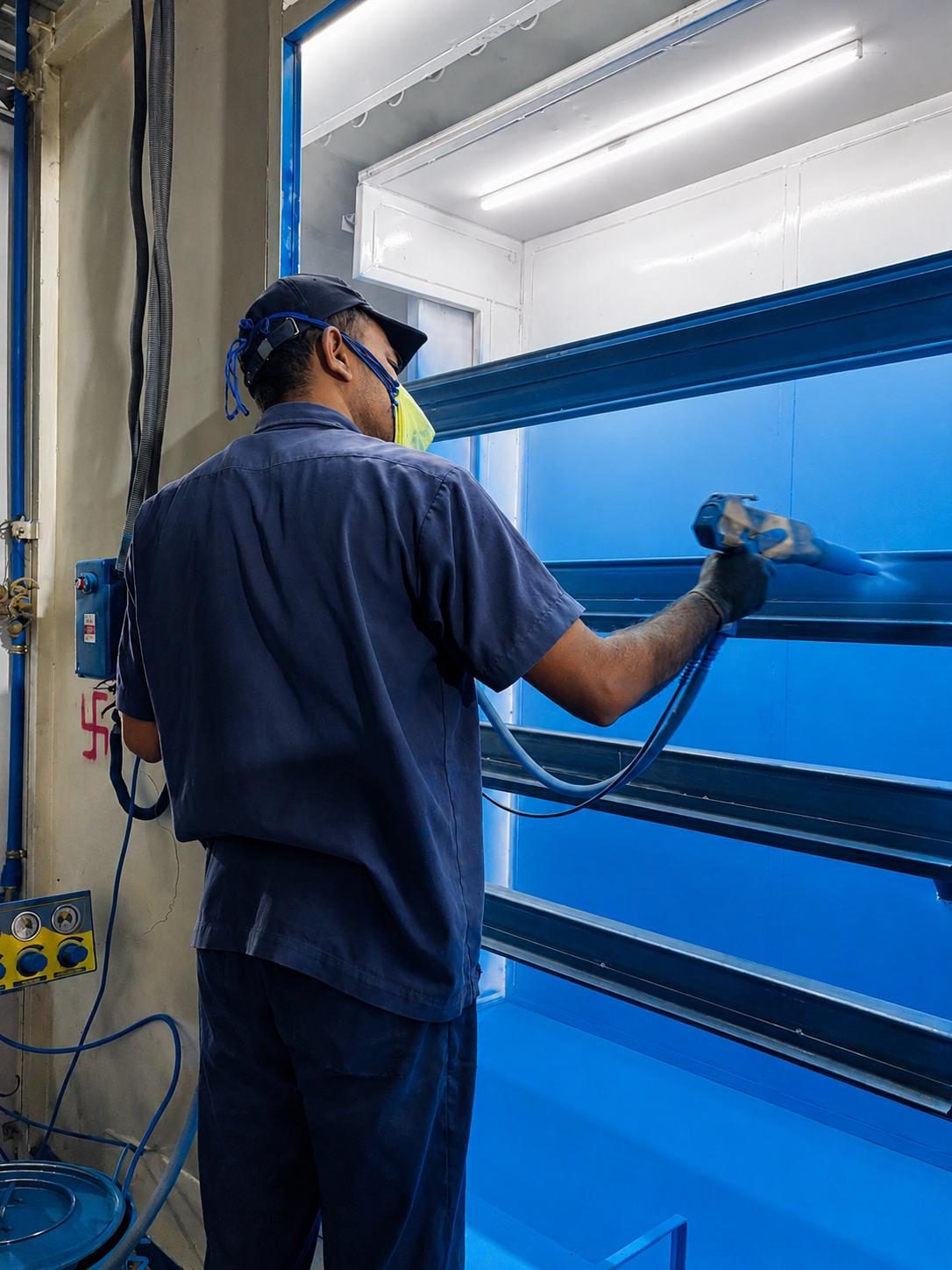
The prepared component is grounded and powder is sprayed using electrostatic spray guns. The powder particles receive an electrical charge and are attracted to the grounded metal surface.
4. Curing
After powder application, the component enters a curing oven (at 180°C - 200°C). The powder melts, flows, and chemically cross-links to form the final coating film.
5. Cooling and Inspection
After curing, components are cooled and inspected for appearance, color uniformity, coating thickness (DFT), cross-hatch adhesion, and surface defects.
Common Powder Coating Defects & Prevention
Orange Peel
Textured surface appearance caused by improper gun distance or voltage settings.
Poor Adhesion
Coating peeling off due to inadequate surface degreasing or under-curing.
Pinholes
Small holes in the film caused by outgassing from raw cast metals or moisture.
Colour Variation
Differences in shade caused by uneven oven baking temperatures.
Why Choose Zenith Coats?
At Zenith Coats, we focus on providing professional industrial powder coating solutions with strict attention to surface preparation, coating application, curing, and quality inspection.
We operate two state-of-the-art industrial units in Kolhapur (Five Star MIDC, Kagal and Gokul Shirgaon MIDC) featuring automated conveyor lines with a 43-foot curing oven and a 7-tank chemical pre-treatment system.
Frequently Asked Questions
What is powder coating?
Powder coating is a dry finishing process in which electrically charged powder is applied to a metal surface and heat-cured in an oven.
Is powder coating durable?
Yes. When proper preparation, pretreatment, and curing are performed, powder coating provides exceptional long-term resistance to impact, corrosion, and chemicals.
Why is pretreatment important?
Pretreatment cleans the raw metal substrate and applies a zinc phosphate conversion layer that maximizes coating adhesion and prevents under-film rust.
Zenith Coats Technical Team
Industrial Coating Specialists • Kolhapur, Maharashtra